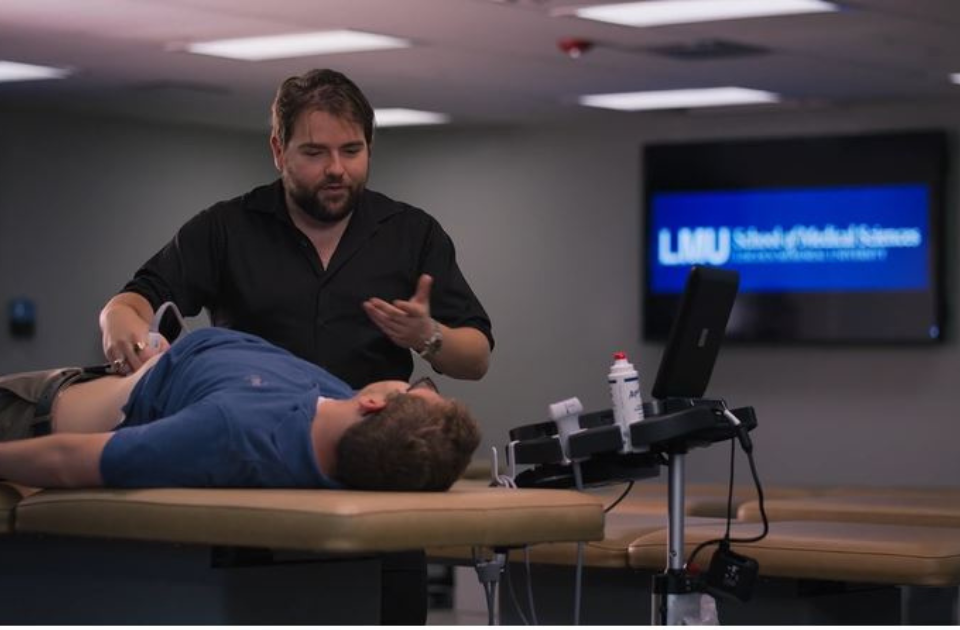
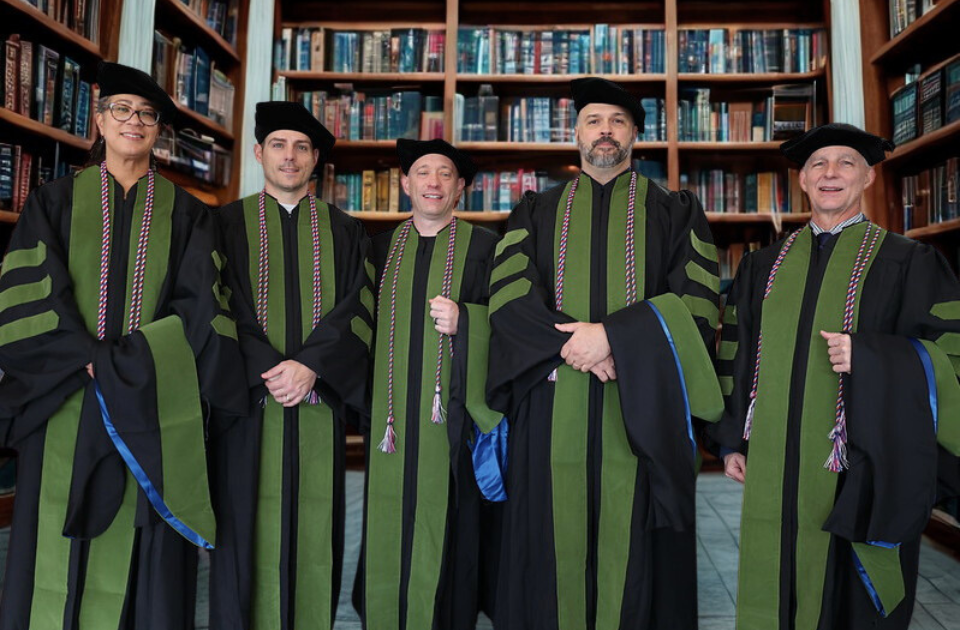
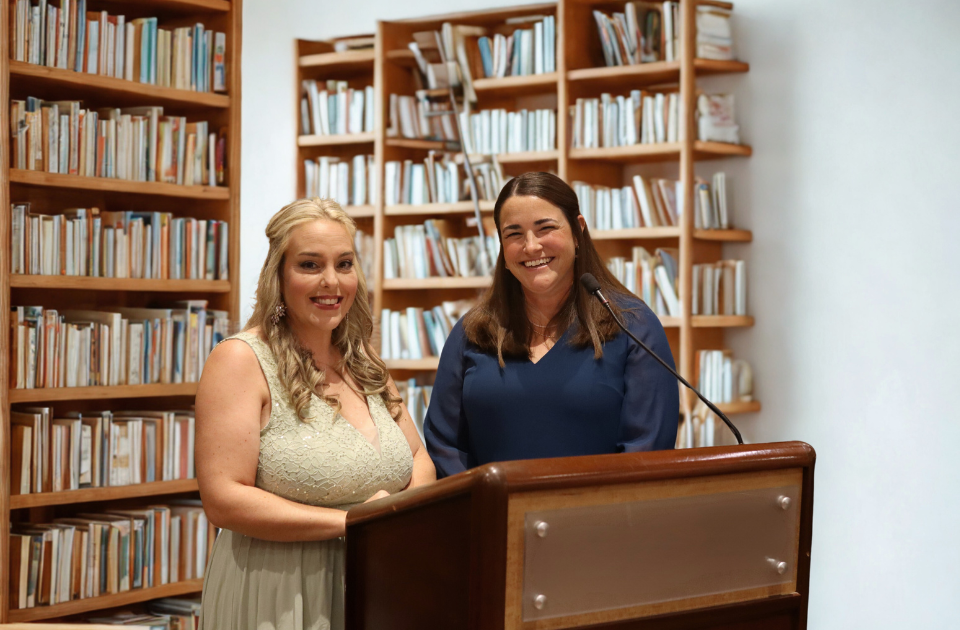
These competencies define the knowledge, skills, and professional behaviors expected of DMS graduates and reflect what students are prepared to demonstrate upon completion of the program.
|
SLO.1 Students will utilize principles of sonography and advanced imaging to interpret findings relevant to clinical practice. |
|
SLO.2 Students will demonstrate the ability to discriminate key information from complex medical topics and specialized medical cases, leading to a deeper understanding of clinical presentation, diagnosis, management and treatment options, and preventative measures. |
|
SLO.3 Students will produce a complete scholarly project and demonstrate scholarly oral and written communication skills. |
|
SLO.4 The students will evaluate advanced medical practices and scholarly and educational resources and reflect on these through reflective writing and interactive discussion on professional issues. |
|
SLO.5 Through effective communication, students will utilize distance learning technologies and collaborations with healthcare professionals to promote patient care, and the profession and address risk management issues. |
|
SLO.6 The students will demonstrate the attributes of a professional to include respect, integrity, professional appearance, ongoing self-assessment, and being a patient advocate. |
|
SLO.7 Formulate strategies for solving problems and leading change within clinical practice by applying strategic leadership principles and a comprehensive understanding of relevant theories, policies, and legal frameworks. |
|
SLO.1 Analyze connections between the internal and external environment and the design, structure, and operations of the program. |
|
SLO.2 Explain the roles and relationships of faculty, administrators, and students in program operations, culture, and improvement efforts. |
|
SLO.3 Formulate strategies for solving problems and leading change in PA education that are informed by relevant leadership, organizational, and educational theory. |
|
SLO.4 Evaluate the alignment of PA curriculum with learning theory, design principles, and the internal and external environment. |
|
SLO.5 Use learning and communication theory to provide feedback and mentoring to students and colleagues. |
|
SLO.6 Compose learning objectives and design instruction that promotes student achievement of the objectives through use of research-based methods and technology. |
|
SLO.7 Design assessment tools that incorporate measurement theory and align with learning objectives, instruction, and the purpose of the assessment. |
|
SLO.8 Formulate a plan to evaluate a set of program goals by selecting appropriate measures, analyzing data, and presenting results. |
|
SLO.9 Determine the study design, data analysis techniques, and important results of educational research studies. |
|
SLO.10 Communicate medical education concepts and research using oral and written methods that incorporate media and language appropriate for the intended audience. |