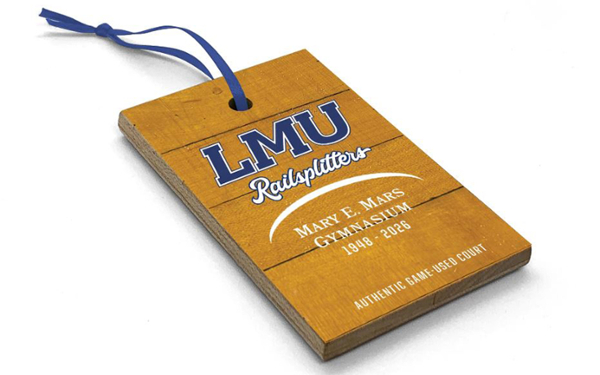
Some places become part of a university's identity. For generations of Lincoln Memorial University students, alumni, athletes, and fans, Mary E. Mars Gymnasium and B. Frank “Tex” Turner Arena are two of those places.
This is where teams made history, students gathered to support the Railsplitters, and generations of the LMU community created memories that stay with them long after their time on campus. Now, Artsman is giving that community a way to hold onto those memories forever.
The new Lincoln Memorial University Court Collection features handcrafted collectibles made from authentic basketball court wood from Mary E. Mars Gymnasium and Tex Turner Arena. Each piece preserves a small part of the places that have helped shape LMU athletics and the memories connected to them.
Order at: Lincoln Memorial University – Artsman
From 1948 to 2026, Mary E. Mars Gymnasium served as the home of LMU basketball and volleyball. Over those decades, the court became a part of the university's athletic legacy, hosting 633 combined men's and women's basketball games and men's and women's volleyball matches. LMU teams won more than 73% of those events.
The gymnasium witnessed 17 conference championships across men's and women's basketball, along with multiple NAIA Tournament appearances. The 1975-76 men's basketball team advanced to the consolation game of the NAIA Tournament. It was also the site of remarkable individual performances, including Nick Sanford's 65-point game on January 29, 1987, the most points scored by an LMU player at Mary Mars.
Its history extended beyond basketball. Men's volleyball teams won more than 90% of their home games on the floor, while the program produced eight All-Americans and seven IVA Players of the Year. Women's basketball added nine NAIA All-Americans and two NAIA District 24 Players of the Year, and women's volleyball produced one All-American.
For those who experienced Mary Mars firsthand, its significance goes beyond the records and championships. It represents teammates, classmates, school traditions, and the moments that made LMU feel like home.
Although Mary E. Mars Gymnasium stopped serving as the university's basketball home in 1991, the court continues to be used for Volleyball until 2026. Artsman's LMU collection offers a tangible connection to this legacy. Made from authentic court wood used from 1948-2026, each collectible preserves a piece of the history built on that floor.
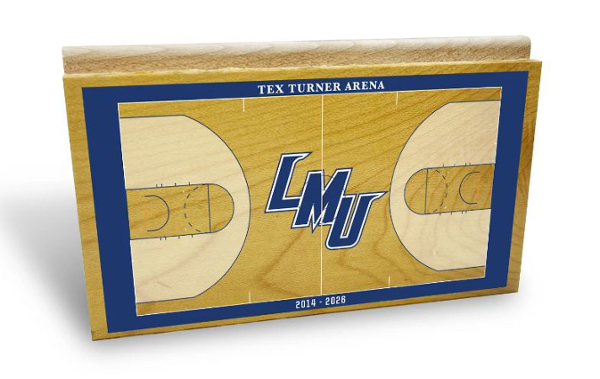
On February 2, 1991, LMU basketball opened a new chapter at B. Frank “Tex” Turner Arena. The arena's first games were a men's and women's doubleheader against Alabama-Huntsville. The women's team earned a 112-95 victory, marking the beginning of a new home for the Railsplitters and Lady Railsplitters.
Named after former LMU football and basketball standout B. Frank “Tex” Turner, who contributed funds toward its construction, the arena replaced Mary E. Mars Gymnasium as the home of LMU basketball. Since then, it has remained a central gathering place for the university community.
Beyond basketball, Tex Turner Arena has hosted concerts, tournaments, commencement ceremonies, and other university events. It has welcomed generations of students, alumni, athletes, families, and fans, becoming part of the LMU experience in its own right.
Artsman's Tex Turner Arena collectibles are made from authentic court wood dated 2014-2026. For those who have cheered from the stands, competed on the floor, or celebrated milestones at the arena, these pieces offer a lasting connection to a place that continues to bring the Railsplitters community together.
The Lincoln Memorial University Court Collection brings together several ways to preserve the history of these two venues. Products include Mini Courts, Mini-Mini Courts, Wood Blocks, and Court Ornaments, with selections made from authentic court wood from Mary E. Mars Gymnasium and Tex Turner Arena.
Each piece is handcrafted by Artsman and includes a Certificate of Authenticity. Because every section of court wood carries its own markings, details, and character, no two pieces are exactly alike.
Whether displayed at home, given to an LMU graduate, or kept as a reminder of years spent on campus, these collectibles offer something beyond traditional university memorabilia: an actual piece of the court where so much of LMU's history took place.
For alumni, current students, families, and Railsplitters fans, it is a way to keep a connection to LMU close, wherever life takes them.
