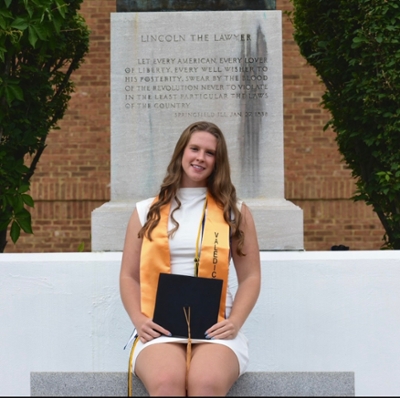
When Abigail Kesler arrived at Lincoln Memorial University, she already had a clear goal. She wanted to become a veterinarian and make care more accessible for the communities that need it most. Through LMU’s Veterinary Early Acceptance Pathway, she found a direct route to make that goal a reality, faster and with purpose.
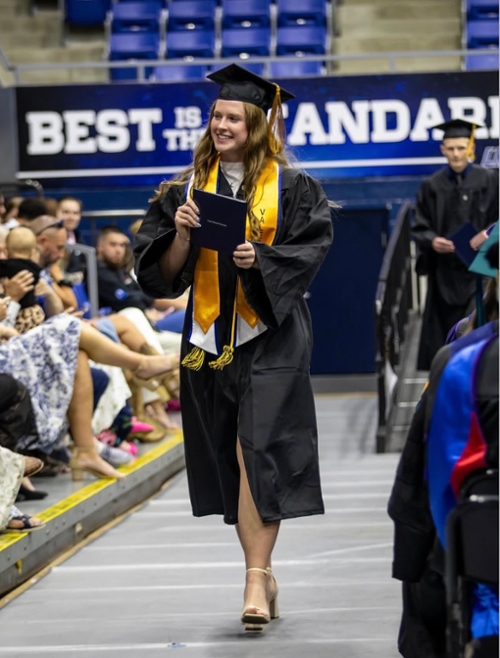
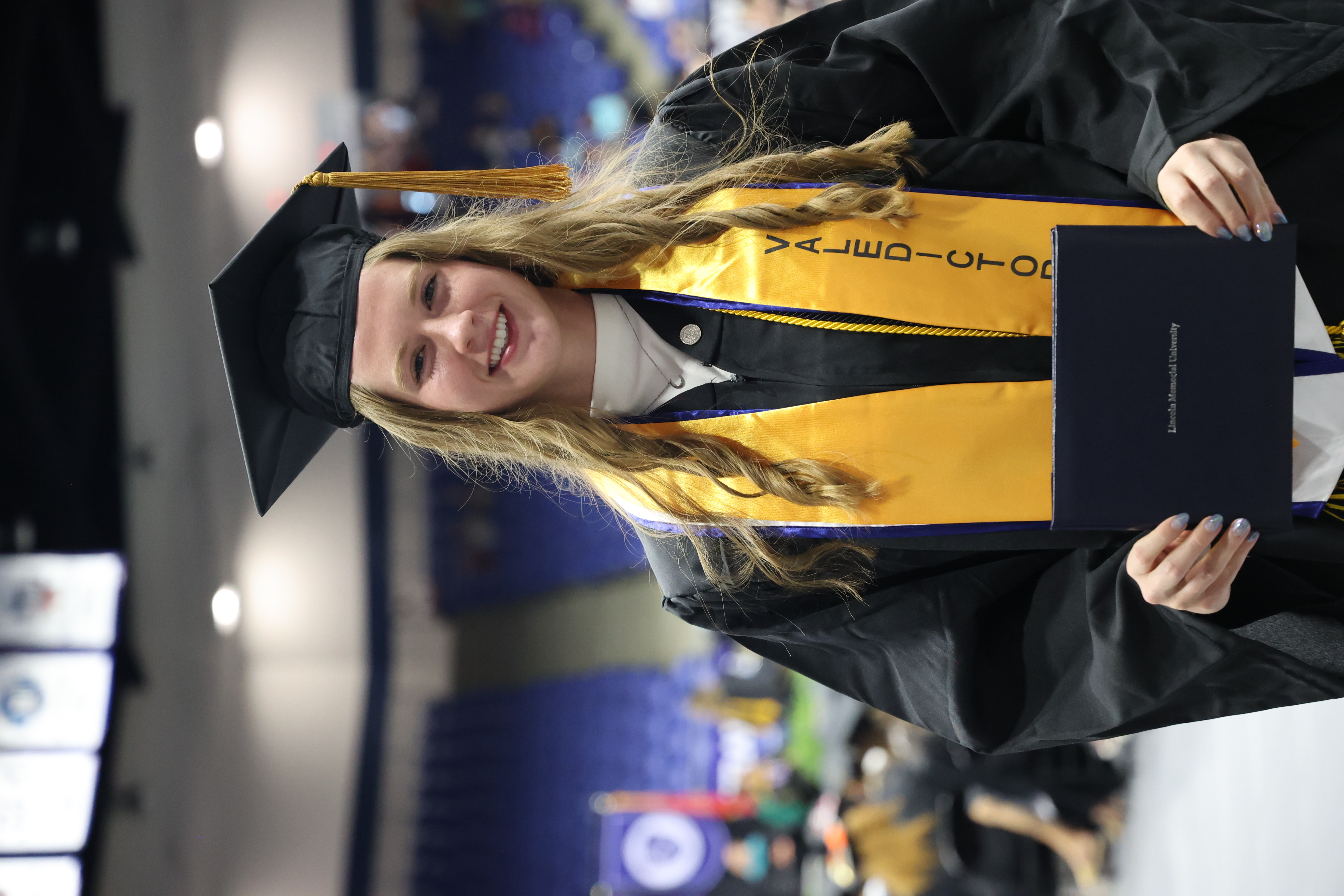
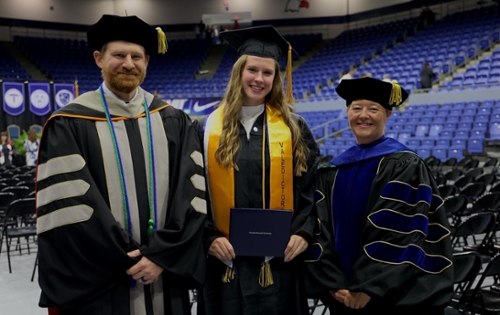
A native of Muncie, Indiana, Kesler balanced an ambitious academic path with life as a student-athlete, competing on the LMU women’s volleyball team while pursuing her degree. Her hard work culminated in being named valedictorian of the LMU Class of 2026.
Kesler said her interest in veterinary medicine developed through both personal passion and hands-on experience.
“My passion for veterinary medicine comes from wanting to strengthen the human-animal bond through accessible and affordable veterinary care,” she explained. “Working in a variety of veterinary clinics throughout high school and college exposed me to individuals and communities who struggled to access veterinary services, and I knew I wanted to make a difference in their lives and the lives of their animals.”
 That clarity made LMU, and specifically the Veterinary Early Acceptance Pathway, the right fit. The pathway offers high-achieving students a guaranteed seat in the Richard A. Gillespie College of Veterinary Medicine (LMU-CVM), provided they meet key benchmarks during their undergraduate studies. Students complete three years of undergraduate coursework, then transition directly into veterinary school. After finishing their first year of the Doctor of Veterinary Medicine program, that coursework counts as the final year of their bachelor’s degree.
For Kesler, that structure provided both clarity and momentum on her path to becoming an emergency and critical care veterinarian.
“Knowing I had a guaranteed seat in the DVM program after completing my undergraduate requirements provided tremendous peace of mind and reduced much of the stress associated with the VMCAS application process. It also allowed me to save an entire year of tuition and coursework,” she said.
Kesler completed her undergraduate degree in three years while maintaining the demands of collegiate athletics and a full academic load.
“Balancing a full academic schedule with collegiate athletics was certainly challenging, and taking 18 credit hours each semester required strong time-management skills. Looking back, however, the experience was absolutely worth it.”
The transition into veterinary school was seamless. Already familiar with LMU’s campus, faculty and support systems, Kesler entered her first year of the DVM program with confidence.
“I did not have to worry about finding housing, learning my way around campus, or adjusting to a completely new environment,” she said. “Having an established routine and support system from my undergraduate years made the transition feel far less stressful and intimidating.”
 Now, after completing her first year of veterinary school, Kesler is already seeing the impact of that head start.
“One of the most rewarding parts of my first year has been meeting veterinary students from across the country and learning from their diverse experiences, skills, and perspectives,” she said. “The collaborative environment encourages us to support one another and grow together. It has also been incredibly rewarding to apply what I have learned to real-world cases and reflect on how much I have grown since my first semester. Most importantly, my first year has reinforced that I am exactly where I belong and that LMU is helping me become the best veterinarian I can be.”
The financial and time-saving benefits of the pathway also played a key role in her decision.
“It allowed me to begin my veterinary education sooner and gave me a clear sense of direction throughout my undergraduate years. Knowing exactly what my next step would be made it easier to stay focused on my long-term goals. It also meant that every semester felt purposeful and directly connected to my future career,” Kesler explained.
For students considering the same path, Kesler emphasized being prepared and committed.
“I would encourage students to gain as much experience in veterinary medicine as possible by shadowing or working in a variety of clinics. Make sure this is truly the career path you want to pursue before committing to an accelerated program,” she suggested. “The Early Acceptance Pathway requires dedication, strong time-management skills, and a willingness to stay focused from the very beginning. If you are ready for the challenge, however, it is an incredible opportunity that can save both time and money while helping you reach your goals faster.”
For Kesler, the journey is about more than earning a degree.
 “Becoming a veterinarian means being a trusted part of my community and making a difference in the lives of both animals and the people who care for them,” she said. “For me, veterinary medicine is about strengthening the human-animal bond, supporting my community, and advocating for animals while helping families navigate both the good and difficult times that come with pet ownership.”
Through LMU’s Early Acceptance Pathway, Kesler is already on a direct path to becoming the veterinarian she set out to be.
Lincoln Memorial University is a values-based learning community dedicated to providing educational experiences in the liberal arts and professional studies. The university’s main campus is located in Harrogate, Tennessee. For more information about undergraduate and graduate programs, contact the Office of Admissions at 423-869-6280 or email admissions@lmunet.edu.
