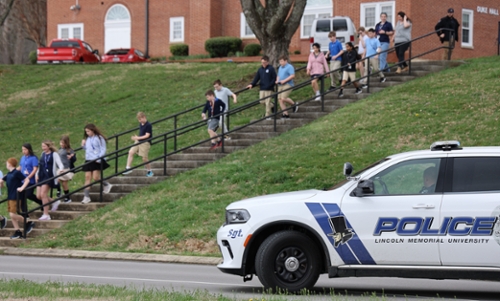
Lincoln Memorial University has launched a sweeping new safety initiative at J. Frank White Academy, anchored by the development of the CENTEGIX CrisisAlert System and a comprehensive upgrade of campus security technology. This work reflects a shared, uncompromising focus by LMU and JFWA leadership on one priority above all others: keeping students safe so they can learn, grow, and thrive.
Funded in part through the Non-Public Schools Award, the investment strengthens and modernizes safety infrastructure across the LMU campus, with particular emphasis on the school environment JFWA students experience each day. The upgrades are designed around a simple idea: every second counts in an emergency, and every child deserves a learning environment where security is intentional, visible, and dependable.
CrisisAlert Puts Help One Click Away
At the center of the initiative is the CENTEGIX CrisisAlert System, a state-of-the-art platform that places an intelligent safety tool in the hands of every JFWA faculty and staff member. Each adult on campus now wears a discreet, wireless badge that can summon help from anywhere they are during the school day, in classrooms, hallways, shared spaces, or while moving between LMU facilities.
With the press of a button, the badge communicates directly with campus safety systems and notifies designated responders that help is needed. The system provides precise location information, allowing LMU security and school leaders to pinpoint where an incident is occurring and respond without delay. Rather than relying on a phone call, intercom, or being near a wall-mounted device, staff can activate the system instantly, even while in motion.
This technology gives teachers and staff a powerful tool for both everyday situations and true emergencies. Whether they are managing a medical concern, a behavioral issue that requires assistance, or a potential threat, they no longer lose critical time trying to reach a phone, front office, or radio. That speed and certainty is what makes the CrisisAlert System a game changer for school safety.
A Layered Approach to Protection
The CrisisAlert badges operate as part of a broader, layered security strategy that LMU is implementing in partnership with JFWA. Enhanced access controls, upgraded emergency sirens, and expanded surveillance coverage are being installed across campus to support prevention, early detection, and coordinated response.
New exterior cameras have been added along key walking paths and at strategic locations to monitor student travel between JFWA facilities and shared LMU spaces such as the Student Center and athletic venues. This allows campus safety personnel to maintain visibility over the places JFWA students use most often, not just the classrooms where they start and end the day.
In addition, the CrisisAlert deployment includes an integrated visitor management system. All campus visitors are now processed through a secure check-in process that verifies identity, screens against safety databases, and issues badges that clearly identify who is authorized to be on site. This gives staff and security an immediate way to distinguish between known community members and guests, reducing ambiguity and strengthening overall situational awareness.
A Shared LMU JFWA Commitment to Safety
Because JFWA operates on the LMU campus, families benefit from the full resources of a university police and security operation that is trained, staffed, and equipped for a wide range of scenarios. LMU Campus Police and Security maintains an active presence throughout the day, and many officers are sworn deputies with local law enforcement, ensuring smooth coordination when outside agencies are needed.
Daily safety practices reflect this shared responsibility. Campus security monitors cameras in-house, controlled access points regulate who may enter JFWA spaces, and students are released only to individuals who have been verified and approved. JFWA staff work side by side with LMU security to plan student movement, support drills, and keep traffic between buildings orderly and supervised.
New technology does not replace that human presence; it amplifies it. CrisisAlert badges give every adult an immediate line to security. Visitor management tools give front office staff better information at their fingertips. Additional cameras give dispatchers a clearer picture when seconds matter. Together, those pieces create a safety net that is stronger than any single tool on its own.
Training, Readiness, and Continuous Improvement
LMU and JFWA leaders emphasize that equipment alone is not enough. The safety initiative also includes regular training exercises, tabletop planning scenarios, and ongoing reviews that align with standards from the Tennessee Office of Homeland Security and nationally recognized best practices. Staff practice how to respond to a range of situations, from routine medical emergencies to rare but serious threats, so that the use of these tools becomes second nature.
Safety plans are revisited and refined as conditions change and as new technology comes online. LMU Facilities, Campus Police and Security, and university administration collaborate closely with JFWA leadership and local emergency management partners to evaluate performance, close gaps, and keep procedures current. The goal is a culture where vigilance is normal, communication is clear, and everyone understands their role in keeping students safe.
Safety and Excellence Go Hand in Hand
"At J. Frank White Academy, our families entrust us with what matters most, their children," said Dr. Kristina Hudson, principal of JFWA. "This safety technology helps us continue to provide a campus where students feel protected, cared for, and free to focus on learning. Safety and excellence go hand in hand here."
By investing in modern tools, strengthening coordination, and maintaining a visible commitment to student protection, LMU and JFWA are setting a standard for what a safe, future-ready school campus can look like. It is a model built on partnership and preparedness, where students can focus on learning and growing, and parents can know that safety is not an afterthought; it is a daily priority.
The CENTEGIX platform integrates seamlessly with existing security measures, including authorized card entry systems for all JFWA buildings, controlled student release protocols, and supervised movement throughout campus. Campus security monitors all surveillance cameras in-house, creating multiple layers of protection that work together to ensure student safety from arrival through dismissal.
National Leadership in School Safety Technology
The CENTEGIX CrisisAlert system has been adopted by school districts nationwide and represents the leading edge of safety technology for educational institutions. The platform has been recognized for reducing emergency response times, empowering confident staff action during critical incidents, and providing comprehensive incident documentation for after-action review and continuous improvement.
Implementation of the system included extensive training for all JFWA faculty and staff, ensuring every team member understands how to activate alerts, respond to different emergency scenarios, and use the technology effectively. Regular drills and tabletop exercises reinforce preparedness and build muscle memory for crisis situations.
JFWA is now accepting applications for the 2026-2027 school year
The J. Frank White Academy is a private, college preparatory day school serving grades Pre-K through 12 on the campus of Lincoln Memorial University. JFWA is fully accredited, and STEM certified by Cognia, which is the first internationally recognized mark of quality for STEM (science, technology, engineering, and mathematics) schools and programs, signaling the growing emphasis on STEM education by educators, politicians, and business leaders around the world. For more information contact JFWA at 423.869.6234 or visit our website at JFWA.LMUnet.edu.
