A recently published study by faculty and student researchers at Lincoln Memorial University highlights a collaborative research effort between the University’s Richard A. Gillespie College of Veterinary Medicine (LMU-CVM) and the College of Dental Medicine (LMU-CDM), underscoring cross-disciplinary work that bridges the dental, biomedical, and veterinary sciences.
The article, “The Role of Short-Chain Fatty Acids (SCFAs) in Colic and Anti-Inflammatory Pathways in Horses,” by Schank et al., was published in the journal Animals and co-authored by researchers from both colleges.
Colic is a potentially life-threatening condition in horses that causes abdominal pain and digestive distress and can vary widely in severity. Research in both veterinary and human medicine has demonstrated that gut health plays a critical role not only in digestion, but also in immunity and overall health. Building on this understanding, researchers from LMU-CVM and LMU-CDM examined how the equine gut microbiome may influence inflammation and the risk of colic, as well as how modulation of the microbiome could support positive clinical outcomes.
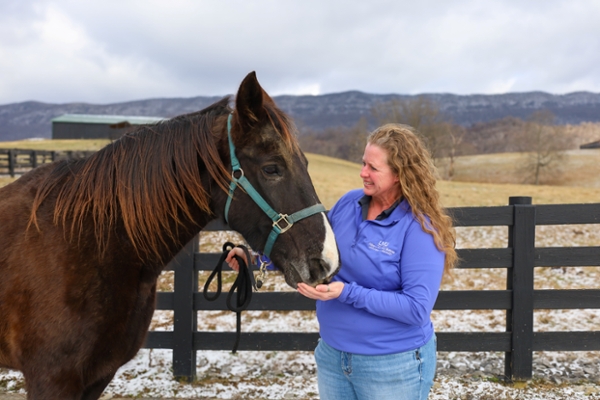
“We have seen that gut health has wide-ranging implications in both human and animal medicine,” said Dr. Stacy Anderson, executive dean of LMU-CVM and an equine surgeon. “Being able to provide horses with prebiotics to reduce the risk of colic could significantly benefit their health and open the door to additional research. This work reflects LMU-CVM’s One Health mission, which recognizes that human, animal, and environmental health are all interconnected.”
Faculty and students from the College of Veterinary Medicine contributed clinical expertise related to equine health and colic, while researchers from the College of Dental Medicine applied their knowledge of the gut microbiome and inflammatory pathways. Together, the teams explored how microbial byproducts in the gut may influence equine gastrointestinal and immune function.
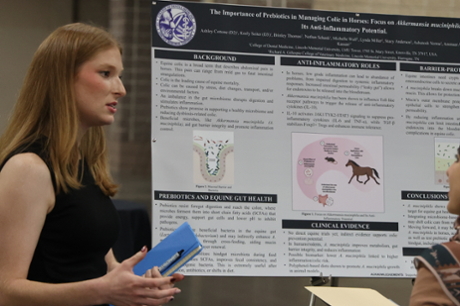
“The College of Dental Medicine was pleased to collaborate with the College of Veterinary Medicine on this interdisciplinary project,” said Dr. Ammaar Abidi, associate dean for research at LMU-CDM. “This collaboration highlights the strength of cross-college research at LMU and the value of interdisciplinary scholarship in advancing translational science. We are especially proud that part of this work was presented at the Tennessee Academy of Science, where Ashley Cottone earned first-place recognition, an achievement that reflects both the quality of the research and the mentorship across our programs.”
“This study exemplifies the type of collaborative, student-engaged research that advances LMU-CVM’s research mission,” said Dr. Ashutosh Verma, associate dean of basic sciences and research at LMU-CVM. “By bringing together expertise from multiple colleges, our faculty and students are addressing complex health challenges in ways that have meaningful translational impact. These partnerships are essential to strengthening LMU’s research enterprise and expanding opportunities for discovery.”
Both LMU-CVM and LMU-CDM plan to continue pursuing collaborative research initiatives that leverage interdisciplinary expertise to advance animal and human health.
Lincoln Memorial University (LMU) is a values-based learning community dedicated to providing educational experiences in liberal arts and professional studies. The LMU-Richard A. Gillespie College of Veterinary Medicine is located on LMU’s main campus in Harrogate, Tennessee, with additional academic facilities in nearby Lee County, Virginia. LMU-CVM is an integral part of the University’s medical programs and provides real-world, community-based education in a collaborative learning environment. For more information about LMU-CVM, call 1.800.325.0900, ext. 6600 or visit us online at vetmed.LMUnet.edu. The LMU College of Dental Medicine, located in Knoxville at the recently renovated LMU Tower, offers Doctor of Medicine in Dentistry and Dental Hygiene programs. For more information, contact CollegeofDentalMedicine@LMUnet.edu.
